
Job offer:
Research Assistant at DFG-funded project “Integrated 3D-Printed Faraday Cup Detectors for Phantom Dosimetry”
We are seeking a PhD candidate in the field of computational medical physics (75%, TV-L E13, 30 month) to join our DFG-funded research project “Dosimetry with a Faraday cup for pencil beam scanning proton therapy”
from 1 January 2027
The project aims to develop and investigate new approaches to the absolute dosimetry of proton fields for proton therapy using pencil beam scanning (PBS). The research addresses both fundamental questions in proton dosimetry and application-oriented aspects of clinical dosimetry.
This position focuses on application-specific dosimetry. The work will include the design and fabrication of phantoms for dosimetric measurements using additive manufacturing techniques, as well as the commissioning of multichannel readout electronics for experimental investigations. The research will also involve experiments with proton beams as well as calculations and simulations for dosimetric applications. The opportunity to pursue a PhD is offered. The doctorate is embedded in medical and medical physics research at the WPE and in the regional research landscape of the Ruhr universities, in particular the DFG-funded research training group 3043 AMTEC-PRO – Advanced Methods and Technologies for Proton Therapy.
West German Proton Therapy Centre Essen
Am Mühlenbach 1, 45147 Essen
Job Scope: 75 Percent
Start: 01.01.2027
Duration: 30 Month
Salary Grade: TV-Länder EG 13
Working at the University Medical Centre Essen
As a maximum-care university hospital with a capacity of around 1,300 beds, we treat 225,000 patients a year with over 6,000 employees in 26 clinics, 23 institutes and specialist centres. Our hospital offers medical care, state-of-the-art diagnostics and comprehensive treatment to the highest international standards. In addition, we offer a comprehensive range of research and teaching services at an internationally competitive level.


Working in the heart of the Ruhr region
In Essen, in the heart of the Ruhr region and the green capital of Europe in 2017, the WPE’s Particle Therapy Clinic offers a challenging field of work in the application of state-of-the-art proton therapy for the effective yet particularly gentle treatment of tumor diseases. Since 2013, the WPE has been successfully treating outpatients with CNS tumors, head and neck tumors, sarcomas, prostate carcinomas and childhood tumors with proton therapy. Since its opening, the WPE has acquired an excellent reputation recognized worldwide. Numerous collaborations at national and international level are proof of the high therapeutic and scientific standard of our work. The result: our patients come to us in Essen not only from all over Germany, but also from many other European and non-European countries. That is why we are looking for you to join our team.
Working at WPE
At our West German Proton Therapy Centre Essen (WPE), under the direction of Prof. Beate Timmermann, we offer state-of-the-art radiation therapy for tumor diseases using protons. The centerpiece of the facility is a 230 MeV cyclotron. The four treatment rooms contain three gantries that can be rotated through 360 degrees and a fixed-beam room with 2 fixed beam lines. Each of the rotating gantries weighs approximately 120 tons and yet ensures an accuracy of up to 0.25 degrees. The Pencil Beam Scanning method (PBS) and a state-of-the-art therapy planning system are used for Intensity Modulated Proton Therapy (IMPT). This means that the entire craniospinal axis (CSA, includes the brain and spinal canal) can be routinely irradiated in the WPE for tumors of the central nervous system (CNS). The availability of IMPT also enables a simultaneous integrated boost (SIB) – i.e. simultaneous boost irradiation.

The project
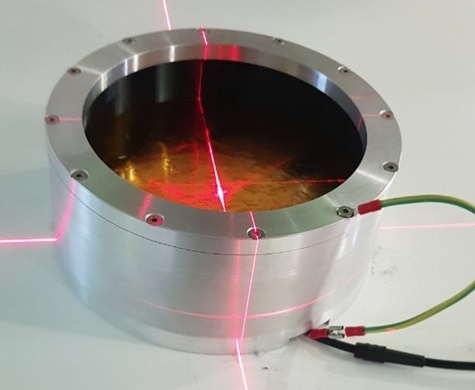
The DFG-funded research project “Dosimetry with a Faraday cup for pencil beam scanning proton therapy” focuses on the further development of dosimetry in proton therapy. Accurate determination of the proton dose is an important prerequisite for the safe and precise delivery of proton therapy. At the same time, modern treatment techniques such as pencil beam scanning (PBS) pose new challenges for dosimetry.
The research team is further developing Faraday cup-based dosimetry, which enables the measurement of the number of protons or proton fluence in the individual, highly focused beam spots of a pencil beam scanning system. A particular focus of the project is application-specific dosimetry and the development of suitable phantoms for dosimetric measurements. The goal is to establish accurate and robust proton dosimetry with comparatively low hardware requirements, supporting both current and future applications in proton therapy.
Your Responsibilities
- Conducting research activities within the above-mentioned project with the goal of earning a Dr. rer. nat. The focus is on application-specific dosimetry.
- Designing phantoms for dosimetry measurements. The emphasis here is on the development and fabrication of phantoms using additive manufacturing techniques, as well as the commissioning of multichannel readout electronics.
- Conducting experiments with proton beams.
- Performing calculations and simulations for dosimetric purposes.
- Preparing publications and presenting scientific results at conferences.
- Participating in the training program and scientific exchange of the DFG Research Training Group 3043 AMTEC-PRO.


Your Qualifications:
- A relevant master’s degree, e.g., in medical technology, engineering, chemistry, or physics
- In-depth knowledge of 3D printing processes
- Knowledge of electronics and programming experience
- English proficiency at the B2 level
- Knowledge in the field of radiation therapy or radiological imaging is desirable but not required
- Please note: Applicants from non-EU countries are required to obtain the appropriate visa and work authorization for employment in Germany. Employment is subject to the necessary residence and work permit being granted.
Look forward to
- A challenging, diverse and application-oriented research in a highly qualified, interdisciplinary, open-minded and collegial team in one of Europe’s largest centres for proton therapy as well as practical experience in the physics team.
- You will work closely with a team of radiation therapy experts
- You will be part of a university, interdisciplinary environment with diverse scientific development opportunities
- Fair pay in accordance with the collective wage agreement (TV-Länder)

Apply now! And become a research assistant at the DFG-Project!
Please send your informative application documents with cover letter, CV, certificates and letter of motivation by 15th October 2026 to wpe-jobs@uk-essen.de
Prof. Dr. Christian Bäumer
West German Proton Therapy Centre Essen (WPE)
Universitätsklinikum Essen
Hufelandstraße 55
45147 Essen, Germany
Further information:
Applications from people of all genders are expressly welcome. Applications from women will be given preferential treatment in accordance with regulations. Measures to promote gender equality in science and, if necessary, to create a more family-friendly workplace are supported.
Please note that applications from suitable severely disabled persons are welcome.
Proton therapy

Radiation therapy with protons is considered to be particularly gentle. We have summarized the background and mode of action of proton therapy on this page.
Tumours treatable

Thanks to our expertise and intensive collaboration with the various disciplines at Essen University Hospital, we are able to irradiate a large number of tumors with proton therapy at the WPE.
Interdisciplinarity

At the West German Proton Therapy Centre, different professional groups work together to provide the best therapy for patients. Various team events are held together.