Launch of the European DOSELIA program
The role of artificial intelligence (AI) in pediatric radiation therapy
DOSELIA is a major European research project that brings together leading institutions from across Europe and is coordinated by the Gustave Roussy Institute in Paris. The WPE is also participating in this project. The aim of this initiative is to improve pediatric radiation therapy by reducing the long-term side effects of treatment. Using state-of-the-art technology, the aim is to assess and minimize radiation exposure to healthy tissue more precisely. This should optimize the treatment of young cancer patients and improve their quality of life. Just under four months after the project was approved, an online kick-off meeting took place on April 7, 2025. At this meeting, the European project partners came together to discuss the first steps of the project.
Radiation therapy in pediatric oncology
Every year, around 35,000 children and adolescents in Europe are diagnosed with cancer. Fortunately, the five-year survival rate is over 80%. In 2020, there were around 600,000 childhood cancer survivors in Europe, and this number is expected to continue to rise.
Radiotherapy plays a crucial role in the treatment of many childhood cancers. However, it can cause long-term side effects that affect both nearby and distant healthy tissue. Epidemiological studies show that one in five patients who have been cured of childhood cancer develop a second tumor before the age of 50. The risk is twice as high as in the general population, even 40 years after treatment.
Although genetic predispositions and certain types of chemotherapy can also increase the risk of developing a second cancer, radiation therapy remains a significant risk factor. For example, radiation to the skull increases the long-term risk of developing a new brain tumor tenfold. For patients who have received thoracic radiation, the risk of developing breast cancer is comparable to that of women who carry the BRCA1 mutation. In addition, the younger the age at the time of radiation, the greater the risk of leukemia, breast cancer, brain tumors, and thyroid cancer.
It is of utmost importance to raise awareness of these potential risks and improve follow-up care for childhood cancer survivors in order to ensure their long-term quality of life.
Development of an AI application for precision radiation therapy
Current planning systems reach their limits when it comes to accurately estimating the radiation doses delivered at a certain distance from the treated area. This significantly complicates both risk assessment and treatment optimization. The DOSELIA project, led by Charlotte Robert, a researcher at the Gustave Roussy Institute and associate professor of medical physics at the University of Paris-Saclay, aims to overcome this challenge. It uses AI to better model the overall radiation exposure of patients and predict long-term risks more reliably.
“The main objective of this project is to develop AI-based dosimetric modeling software. This tool will enable more accurate assessment of the doses received by the whole body of young patients undergoing radiation therapy. All radiation exposures will be taken into account, including those from CT planning and positioning images taken during treatment sessions. In addition, this project will provide predictive models for the risk of secondary cancer in cured patients. Ultimately, this AI tool will serve as a valuable clinical decision support system, allowing radiation oncologists to tailor treatment parameters to each patient’s profile in order to achieve an optimal balance between therapeutic efficacy and minimization of side effects,” explains Charlotte Robert.
Currently, precise whole-body dose assessments require complex Monte Carlo simulations that model the interaction of ionizing radiation with biological tissue. However, these methods require access to supercomputers and are not suitable for direct clinical use. DOSELIA’s AI-based approach aims to achieve comparable accuracy in a fraction of the time required.
Validation of models using real-world data
To improve the accuracy of its predictions, DOSELIA will draw on data from the HARMONIC program. This European project tracks cohorts of children and adolescents undergoing photon or proton radiation therapy. Funded by the European Commission, HARMONIC collects comprehensive clinical, dosimetric, and biological data. Through this valuable collaboration, DOSELIA will be able to leverage a unique European database to train and validate its algorithms with real-world data. This will help to significantly increase the accuracy of dose estimation and risk prediction for future patients.
“The integration of the AI tool developed as part of the DOSELIA project into clinical routine could revolutionize pediatric radiation therapy. It provides a more detailed overview of the doses absorbed by the entire body. This innovative approach will enable physicians to optimize each treatment to minimize the impact on healthy tissue while ensuring optimal tumor control,” says a spokeswoman for the institution.
Project partner
- Gustave Roussy (France, Projekt coordinator)
- French Commission for Alternative Energies and Atomic Energy (France)
- French National Institute of Health and Medical Research (France)
- University of Caen (France)
- François-Baclesse Center (France)
- Aarhus University (Denmark)
- Aarhus University Hospital (Denmark)
- Ludwig Maximilian University of Munich (Germany)
- West German Proton Therapy Center Essen (Germany)
- University Hospital Essen (Germany)
This Europe-wide initiative emphasizes the essential role of cooperation in promoting innovative approaches to treating cancer in children.
Financing
DOSELIA has received €944,000 in funding from the European Union as part of the PIANOFORTE project (grant agreement No. LW-Contract 2025-0019).
PIANOFORTE is an initiative supported by Euratom that aims to improve protection against ionizing radiation in medicine and the environment.
Children’s program at WPE
More than half of the patients treated at the WPE are children. This makes the WPE one of the largest radiation therapy treatment programs for children.
Over 2,000 children treated
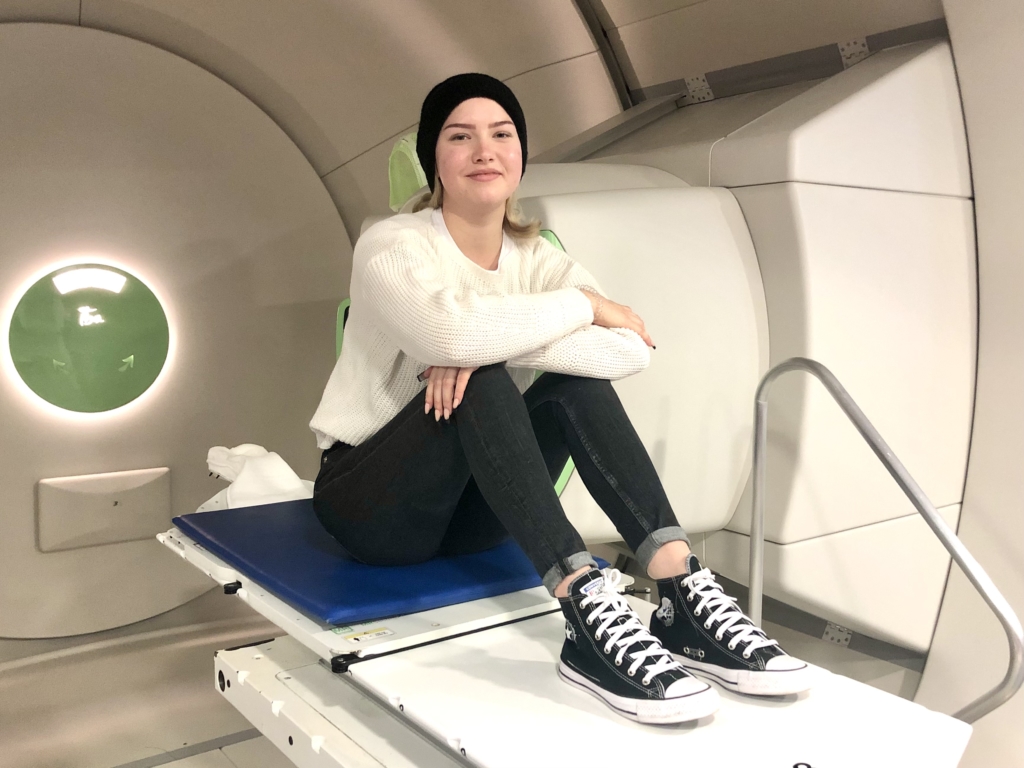
At the beginning of 2023, the 2000th child was treated at the WPE.
Press contact
Medical director:
Beate Timmermann
University Hospital Essen / University Duisburg-Essen
Phone: +49 (0)201 723 – 6607
E-Mail: partikeltherapie@uk-essen.de
Redaktion: Dr. Stefanie Schulze Schleithoff, Phone: +49 (0) 201-723-6607, partikeltherapie@uk-essen.de
Funded by the European Union. However, the views and opinions expressed are solely those of the author(s) and do not necessarily reflect those of the European Union or the European Health and Digital Media Executive Agency (HADEA). Neither the European Union nor the funding authority can be held responsible for them.